Industrial Motor Series
EP-YVF2 Variable-Frequency Motors
Ip54 variable-frequency three-phase asynchronous motors with independent ventilation. Selection is presented together with the mechanical transmission so buyers can define a usable drive rather than a bare motor.
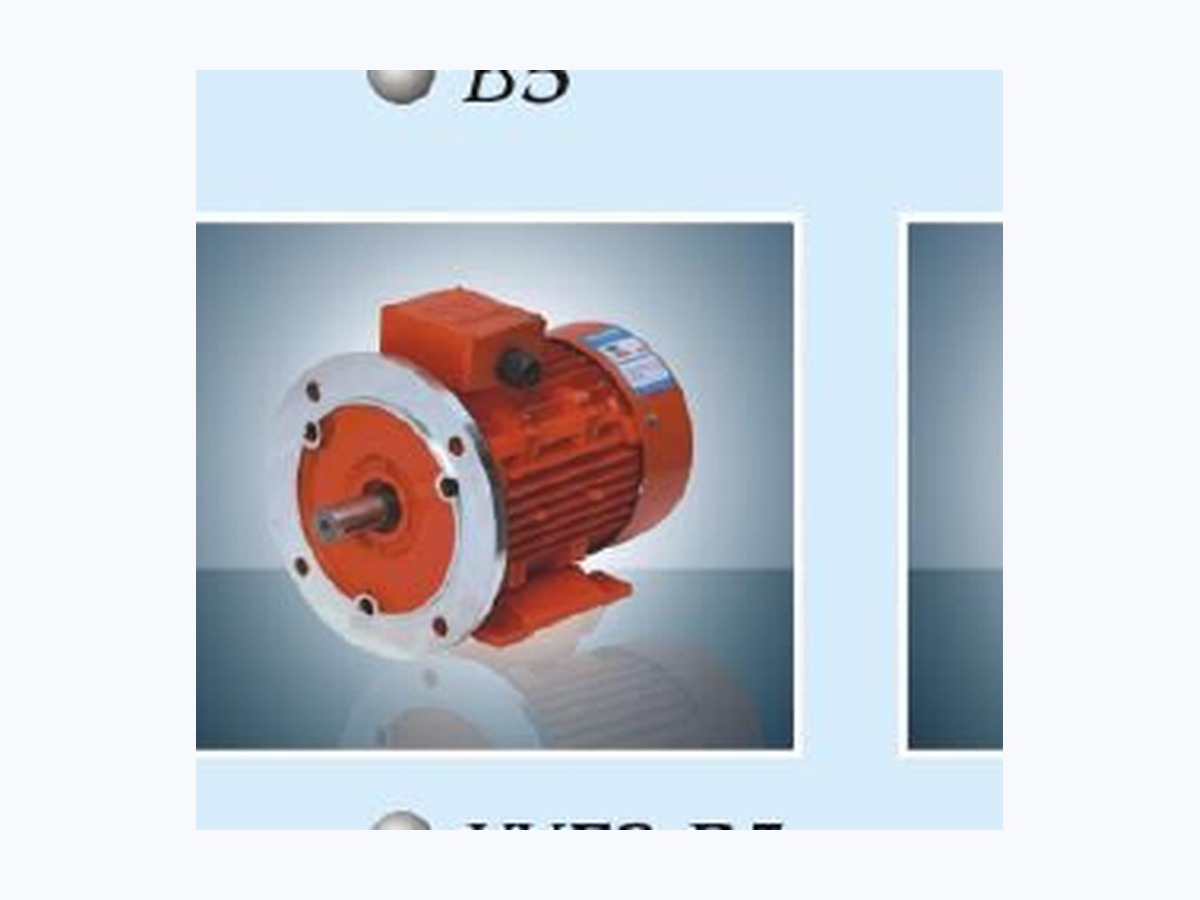
Series Role
EP-YVF2 Variable-Frequency Motors belongs inside a complete drive calculation, not a one-line motor lookup. The engineering question begins with the machine: required shaft speed, running torque, acceleration, stopping behavior, operating hours and environment. In practical work this family is used around conveyors, process lines, pumps, fans, mixers and controlled-speed machinery. Those duties are different enough that the same nominal power can require different mounting, control and transmission arrangements.
The documented family basis includes 380 V, 50 Hz base frequency, S1 duty and IC416 cooling. Those conditions are useful anchors, but the final selection still has to reflect the exact variant and installation. A machine running above the documented ambient or altitude range, a VFD drive operating continuously at low speed, or a high-inertia start cannot be treated as a routine nameplate substitution.
The mechanical path often includes VFDs, gearboxes, couplings, drive shafts and pulley systems. The ratio, bore, key, shaft arrangement, overhung load and alignment are part of motor reliability. A motor can be electrically correct yet still fail to fit or run smoothly if the gearbox input, coupling, pulley or sprocket is treated as a separate purchase with different interface assumptions.
Selection Workflow
Start with the driven-machine speed and torque profile. Convert the machine requirement to a motor speed and gearbox ratio, then check starts, duty, mounting and environment. Variable-speed work needs a minimum continuous speed and cooling review. Stopping or holding duties require a separate brake discussion rather than an assumption that the running motor can provide the needed stop.
For replacements, record frame size, shaft diameter and extension, foot or flange pattern, terminal-box access and the gearbox or coupling interface. A photograph helps identify construction, but measured dimensions and nameplate data are the stronger inputs when avoiding an installation mismatch.
Matched Components
Typical paired components include VFDs, gearboxes, couplings, drive shafts and pulley systems. Ever-Power’s wider transmission portfolio also covers gearboxes, chains, sprockets, gears, couplings, pulleys and shaft-related parts. That allows an RFQ to keep more of the torque path under one engineering review.
Matched does not mean automatically compatible. Bore, key, ratio, shaft loads, guard space, output orientation and service duty still have to be confirmed. The value of a complete package is that those interfaces are visible before the motor and gearbox are frozen.
Regional Projects
The receiving country matters. The United States, European Union, Japan, Brazil, Mexico and other markets define motor-efficiency and conformity scopes differently. State the destination early, especially for OEM machinery that may be built in one country and installed in another.
Regional market pages on this site describe the main public rules for priority countries and the industrial sectors where these motors are commonly evaluated. The exact product still requires project-level confirmation; a family name is not used as a universal compliance claim.
Maintenance Focus
Good maintenance starts with baseline information. After installation, record current, temperature, noise and vibration at a known load. Keep cooling paths clear and inspect alignment, couplings, belts or chain drives during routine maintenance. A change in bearing temperature can originate from lubrication, belt tension or alignment even when the electrical load looks normal.
When a motor fails to start or speed falls under load, separate electrical checks from mechanical checks. Verify voltage and phase condition, but also confirm that the driven machine turns freely. This whole-drive approach mirrors the troubleshooting logic in the supplied motor documentation.
Frequently Asked Questions
Where is EP-YVF2 Variable-Frequency Motors normally used?
It is intended around conveyors, process lines, pumps, fans, mixers and controlled-speed machinery. The final choice depends on real load, speed, duty, mounting and environment.
Can the motor be supplied with a gearbox?
Yes. Typical pairings include VFDs, gearboxes, couplings, drive shafts and pulley systems. Ratio and interface are selected from the driven-machine requirement.
What information should an RFQ include?
Send power or torque, required output speed or ratio, voltage, frequency, mounting, duty, ambient conditions, target country and a drawing of the driven interface.
Do all countries use the same motor efficiency rules?
No. Scope and conformity routes vary by market, motor type and rating.
Can you review a replacement drive?
Yes. Include the existing nameplate plus shaft, mounting and envelope dimensions and describe the machine duty.
Discuss Your Drive Requirement
Send the motor rating, supply, mounting arrangement, driven-machine duty and target output speed. Our team can review the motor together with the gearbox and the rest of the transmission train.