After Selection
Technical Support
Installation, commissioning and troubleshooting guidance for motors and complete drive packages.
Installation Support
Before startup, confirm mounting, shaft alignment, coupling or belt setup, ventilation clearance, rotation direction and protection settings. If a gearbox is installed, verify its lubrication, orientation and output interface under the gearbox documentation.
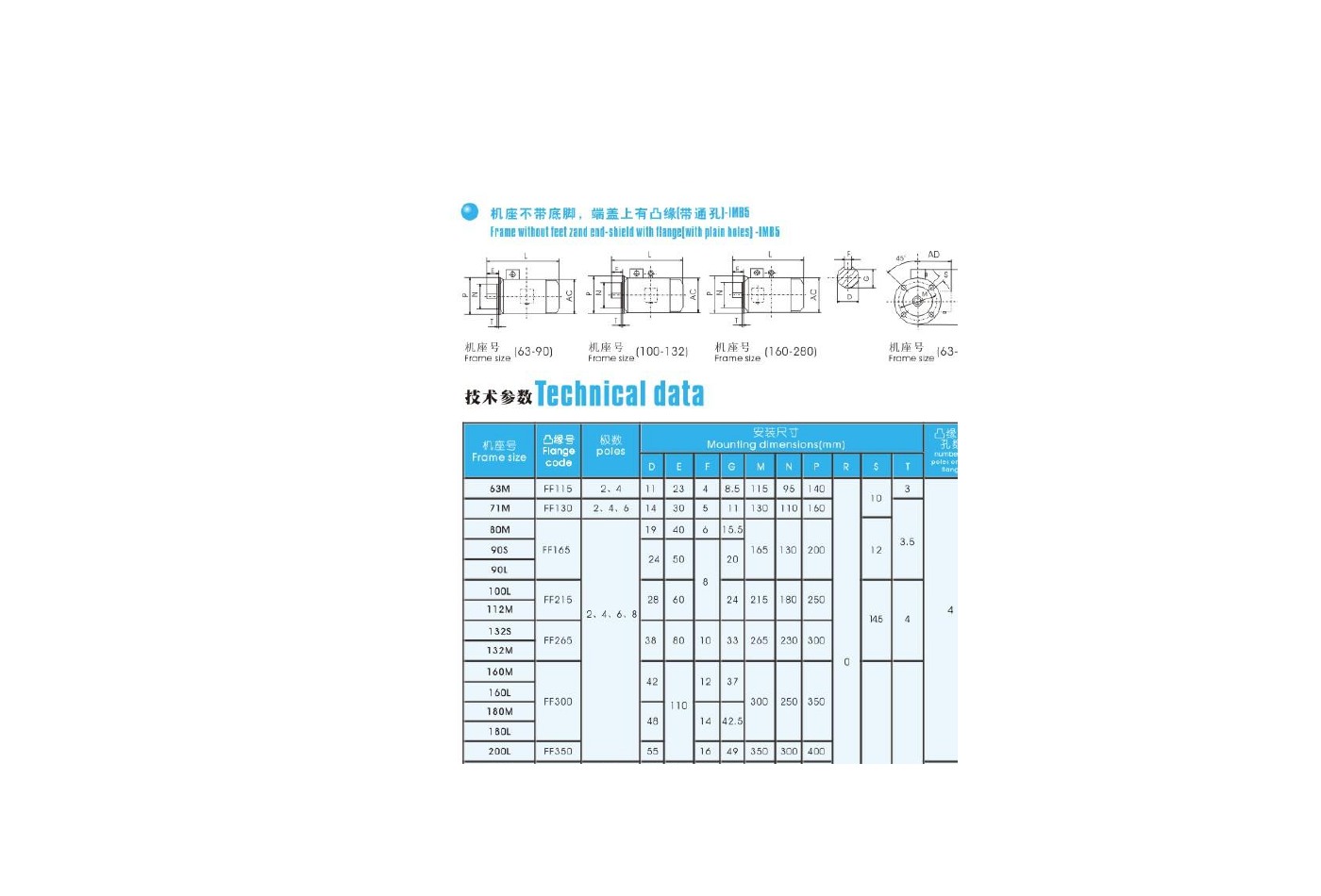
For replacement jobs, do not assume a matching power rating guarantees mechanical interchangeability. Check frame, shaft, flange, terminal-box access and the driven connection.
Troubleshooting
If a motor will not start, verify supply and phase continuity and ensure the driven machine turns freely. For overheating, inspect load, voltage, ventilation and winding condition. For bearing heat or vibration, inspect alignment, lubrication, belt tension, balance and foundation.
The same symptom can come from different parts of the drive. A high current can be caused by electrical supply, overload or a mechanically binding machine. Bearing heat can be caused by alignment or transmission forces. Collect observations before replacing parts.
Documentation
Send the model, application, measured symptoms and photos to [email protected]. A useful support case includes operating load, current, voltage, ambient condition and any recent change to the driven machine.
For gearbox packages, include the gearbox model or drawing and describe the output connection. For chain drives, show sprockets and guards. For belt drives, include pulley arrangement. These details help separate the fault source from the symptom.
Buyer Review
Technical Support is written for a buyer who needs a usable machine component rather than a generic web description. The review should connect electrical rating to the mechanical transmission, the destination market and the actual installation. That means the RFQ should identify what the motor drives, how the output speed is produced, what interfaces are fixed and which parts can still be optimized.
For gearbox-driven machinery, define the output shaft requirement before fixing the motor and reducer. For chain-driven equipment, add sprocket and chain information. For belt drives, include pulley geometry and guard space. For direct coupling, preserve shaft and alignment details. This approach gives the quotation a clear engineering boundary and makes later installation checks much easier.
Export projects need one more line on the data sheet: destination country. Efficiency and conformity frameworks differ between the United States, European Union, Japan, Brazil, Mexico and other industrial markets. The destination is therefore treated as a design input, not a shipping detail added after the machine has already been specified.
Project Handover
When the project moves from purchasing to installation, keep the accepted model, technical table, drawing and transmission interfaces together. Commissioning should confirm rotation, current, temperature, alignment, coupling or belt condition and any gearbox requirements. A short baseline record gives maintenance teams something real to compare with when noise, vibration or temperature changes later.
Where a parameter is not documented in the source material, this site leaves it for engineering confirmation. The same principle applies to certification and regional compliance. A precise open question is safer than a polished assumption, particularly in hazardous locations, unusual ambient conditions or installations with braking and variable speed.
Service Record
When a support case is opened, a short history can be more useful than a long description. Note when the symptom began, whether load or speed changed, what maintenance was recently performed and whether current, temperature or vibration moved at the same time. This helps separate a motor problem from a gearbox, coupling, bearing, pulley, chain or driven-machine problem.
For recurring equipment, keep a commissioning sheet and one updated drive drawing. That gives maintenance a controlled reference for replacement parts and makes it easier to see when a later modification changed alignment, ratio, guarding or loading.
Discuss Your Drive Requirement
Send the motor rating, supply, mounting arrangement, driven-machine duty and target output speed. Our team can review the motor together with the gearbox and the rest of the transmission train.