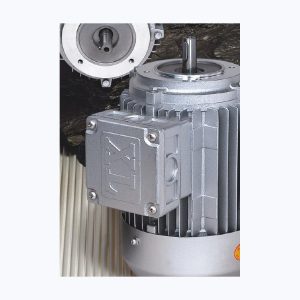
Description
EP-Y2EJ Brake Motor
EP-Y2EJ-100L1-4
EP-Y2EJ-100L1-4: 2.2 kW, 1410 r/min. Ip54 electromagnetic brake three-phase asynchronous motors for stopping, positioning and anti-coast duties; configured with matched transmission components when required.
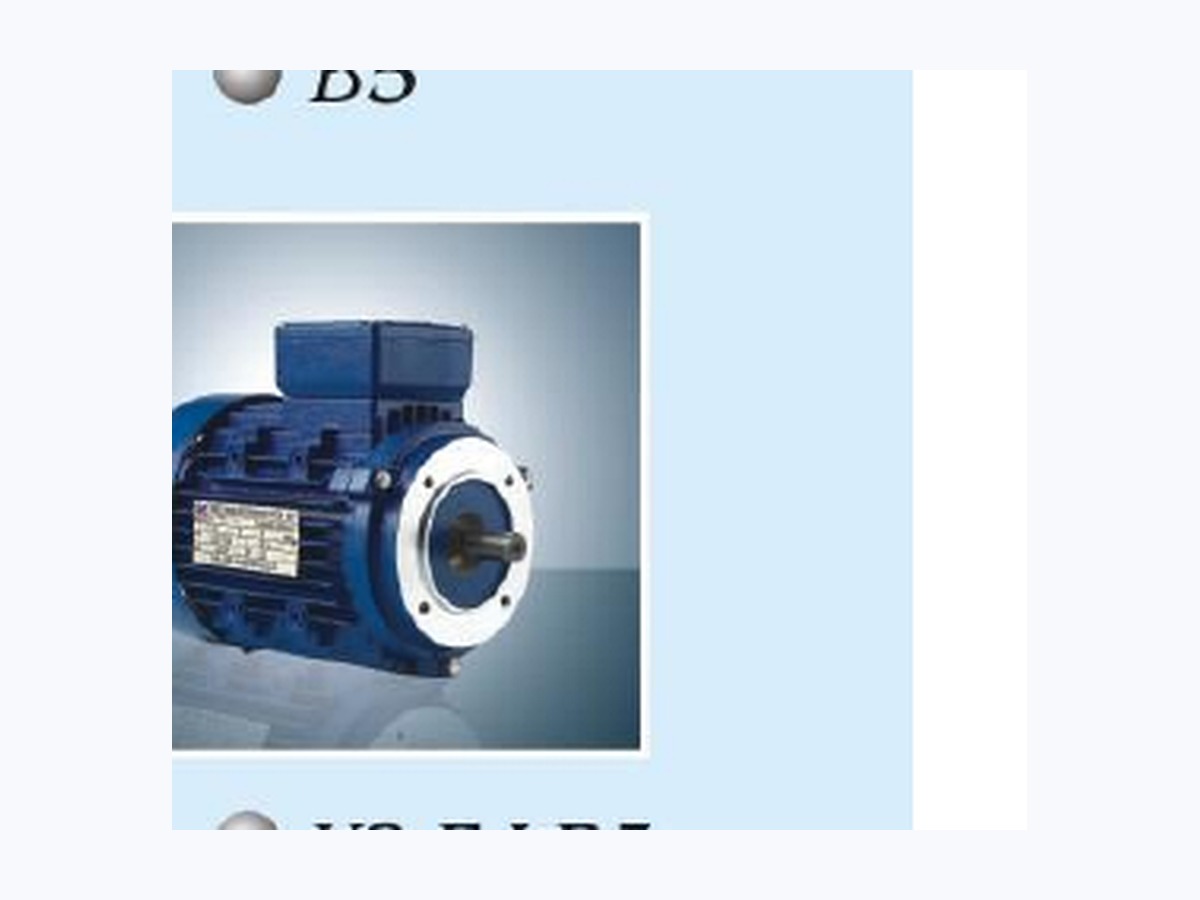
Model Duty
Before the drawing is released, EP-Y2EJ-100L1-4 is considered as a motor duty combined with controlled stopping or holding selection with efficiency 81%. The useful engineering question is how that operating point behaves in lifting, packaging, printing, transport and positioning machinery. Record the driven-machine load and output speed first, then check vibration 1.8 mm/s against the actual supply and duty. A motor row becomes meaningful only when those values are attached to the machine it will run.
If the machine speed is created through reduction, calculate the complete ratio from motor shaft to driven shaft. A gearbox, sprocket or pulley can change both speed and shaft loading. The drawing should show where gearboxes, couplings, brake controls, pulleys, sprockets and chains connect to EP-Y2EJ-100L1-4 while there is still room to change the layout.
Application Match
When a gearbox is added, EP-Y2EJ-100L1-4 is considered as a motor duty combined with controlled stopping or holding selection with noise 75 dB(A). The useful engineering question is how that operating point behaves in lifting, packaging, printing, transport and positioning machinery. Record the driven-machine load and output speed first, then check rated output 2.2 kW against the actual supply and duty. A motor row becomes meaningful only when those values are attached to the machine it will run.
Rated current 5.1 a is a useful catalog reference, but commissioning should create a site baseline under a known load. Note current, temperature and visible vibration at the same time. If a gearbox or chain stage is part of the drive, record its condition too while there is still room to change the layout.
Transmission Choice
For maintenance planning, EP-Y2EJ-100L1-4 is considered as a motor duty combined with controlled stopping or holding selection with vibration 1.8 mm/s. The useful engineering question is how that operating point behaves in lifting, packaging, printing, transport and positioning machinery. Record the driven-machine load and output speed first, then check reference speed 1410 r/min against the actual supply and duty. A motor row becomes meaningful only when those values are attached to the machine it will run.
Destination country belongs in the technical record. A motor that is mechanically suitable may still sit inside a different efficiency, marking or conformity scope in the United States, European Union, Japan, Brazil, Mexico or another market. Separate that regulatory check from the machine calculation while there is still room to change the layout.
Electrical Behavior
For this model, EP-Y2EJ-100L1-4 is considered as a motor duty combined with controlled stopping or holding selection with rated output 2.2 kW. The useful engineering question is how that operating point behaves in lifting, packaging, printing, transport and positioning machinery. Record the driven-machine load and output speed first, then check rated current 5.1 A against the actual supply and duty. A motor row becomes meaningful only when those values are attached to the machine it will run.
The mechanical review should include gearboxes, couplings, brake controls, pulleys, sprockets and chains. In this model size, do not assume that matching power guarantees a matching shaft or flange. Confirm the drawing, bore, key, shaft engagement and guard space while there is still room to change the layout. The selected row lists brake torque of 30 N·m and brake time of 0.20 s. Those values should be compared with the actual driven inertia and stopping function; a brake motor does not by itself define the machine safety system.
Physical Integration
At the documented operating point, EP-Y2EJ-100L1-4 is considered as a motor duty combined with controlled stopping or holding selection with reference speed 1410 r/min. The useful engineering question is how that operating point behaves in lifting, packaging, printing, transport and positioning machinery. Record the driven-machine load and output speed first, then check efficiency 81% against the actual supply and duty. A motor row becomes meaningful only when those values are attached to the machine it will run.
For purchasing, state whether EP-Y2EJ-100L1-4 is a new OEM selection, an interchange or part of an efficiency retrofit. That context decides which dimensions are fixed and which can change. Keep gearboxes, couplings, brake controls, pulleys, sprockets and chains inside the same scope so the complete torque path remains understandable.
Destination Review
On a new machine, EP-Y2EJ-100L1-4 is considered as a motor duty combined with controlled stopping or holding selection with rated current 5.1 A. The useful engineering question is how that operating point behaves in lifting, packaging, printing, transport and positioning machinery. Record the driven-machine load and output speed first, then check noise 75 dB(A) against the actual supply and duty. A motor row becomes meaningful only when those values are attached to the machine it will run.
If the machine speed is created through reduction, calculate the complete ratio from motor shaft to driven shaft. A gearbox, sprocket or pulley can change both speed and shaft loading. The drawing should show where gearboxes, couplings, brake controls, pulleys, sprockets and chains connect to EP-Y2EJ-100L1-4 so the complete torque path remains understandable.
Startup Checks
In a replacement project, EP-Y2EJ-100L1-4 is considered as a motor duty combined with controlled stopping or holding selection with efficiency 81%. The useful engineering question is how that operating point behaves in lifting, packaging, printing, transport and positioning machinery. Record the driven-machine load and output speed first, then check vibration 1.8 mm/s against the actual supply and duty. A motor row becomes meaningful only when those values are attached to the machine it will run.
Reference speed 1410 r/min is a useful catalog reference, but commissioning should create a site baseline under a known load. Note current, temperature and visible vibration at the same time. If a gearbox or chain stage is part of the drive, record its condition too so the complete torque path remains understandable. The selected row lists brake torque of 30 N·m and brake time of 0.20 s. Those values should be compared with the actual driven inertia and stopping function; a brake motor does not by itself define the machine safety system.
Service Clues
When the drive is assembled, EP-Y2EJ-100L1-4 is considered as a motor duty combined with controlled stopping or holding selection with noise 75 dB(A). The useful engineering question is how that operating point behaves in lifting, packaging, printing, transport and positioning machinery. Record the driven-machine load and output speed first, then check rated output 2.2 kW against the actual supply and duty. A motor row becomes meaningful only when those values are attached to the machine it will run.
Destination country belongs in the technical record. A motor that is mechanically suitable may still sit inside a different efficiency, marking or conformity scope in the United States, European Union, Japan, Brazil, Mexico or another market. Separate that regulatory check from the machine calculation so the complete torque path remains understandable.
Retrofit Notes
During technical review, EP-Y2EJ-100L1-4 is considered as a motor duty combined with controlled stopping or holding selection with vibration 1.8 mm/s. The useful engineering question is how that operating point behaves in lifting, packaging, printing, transport and positioning machinery. Record the driven-machine load and output speed first, then check reference speed 1410 r/min against the actual supply and duty. A motor row becomes meaningful only when those values are attached to the machine it will run.
The mechanical review should include gearboxes, couplings, brake controls, pulleys, sprockets and chains. In this model size, do not assume that matching power guarantees a matching shaft or flange. Confirm the drawing, bore, key, shaft engagement and guard space so the complete torque path remains understandable.
RFQ Detail
For an OEM buyer, EP-Y2EJ-100L1-4 is considered as a motor duty combined with controlled stopping or holding selection with rated output 2.2 kW. The useful engineering question is how that operating point behaves in lifting, packaging, printing, transport and positioning machinery. Record the driven-machine load and output speed first, then check rated current 5.1 A against the actual supply and duty. A motor row becomes meaningful only when those values are attached to the machine it will run.
For purchasing, state whether EP-Y2EJ-100L1-4 is a new OEM selection, an interchange or part of an efficiency retrofit. That context decides which dimensions are fixed and which can change. Keep gearboxes, couplings, brake controls, pulleys, sprockets and chains inside the same scope while there is still room to change the layout.
Technical Parameters
The table below carries the documented data for this selected variant. Fields not documented for the row are not filled with approximate values.
| Parameter | Value |
|---|---|
| Model | EP-Y2EJ-100L1-4 |
| Series | EP-Y2EJ Electromagnetic Brake Motors |
| Rated Output | 2.2 kW |
| Rated / Reference Speed | 1410 r/min |
| Rated Current | 5.1 A |
| Efficiency | 81% |
| Power Factor | 0.81 |
| Vibration | 1.8 mm/s |
| Noise | 75 dB(A) |
| Locked-Rotor Current | 7.0× |
| Locked-Rotor Torque | 2.3× |
| Maximum Torque | 2.3× |
| Brake Torque | 30 N·m |
| Brake Time | 0.20 s |
Frequently Asked Questions
What is the rated output of EP-Y2EJ-100L1-4?
2.2 kW
What speed is listed for EP-Y2EJ-100L1-4?
1410 r/min
Which transmission parts can be reviewed with it?
Typical paired components include gearboxes, couplings, brake controls, pulleys, sprockets and chains. Final compatibility is checked from the machine drawing and duty.
Can this motor be used in any country?
No universal claim is made. Destination efficiency, marking and conformity requirements must be checked for the exact configuration.
What should I send for a replacement?
Send nameplate data plus shaft diameter and extension, key, foot or flange pattern, frame or shaft height, envelope and the driven connection.
What commissioning data is useful?
Record current, temperature, noise and vibration under a known load. The selected row lists 5.1 A, 75 dB(A) and 1.8 mm/s where documented, providing reference values for comparison rather than replacing a site baseline.
Quote EP-Y2EJ-100L1-4
Send the driven-machine duty, required output speed or gearbox ratio, supply, mounting, environment and destination country. Include any gearbox, coupling, chain, sprocket or pulley in the scope so the interfaces can be reviewed together.